Alexandria, VA · Garage Door Service
What a Technician Checks First on an Alexandria Garage Door
In Alexandria's 1960s-70s housing stock and cold-severe winters, here's exactly what a technician checks first before quoting a repair on a garage door.
- Repairs & new doors
- Springs & openers
- Serving 5 nearby communities
What 60 freeze-thaw cycles do to garage doors before you need garage door repair
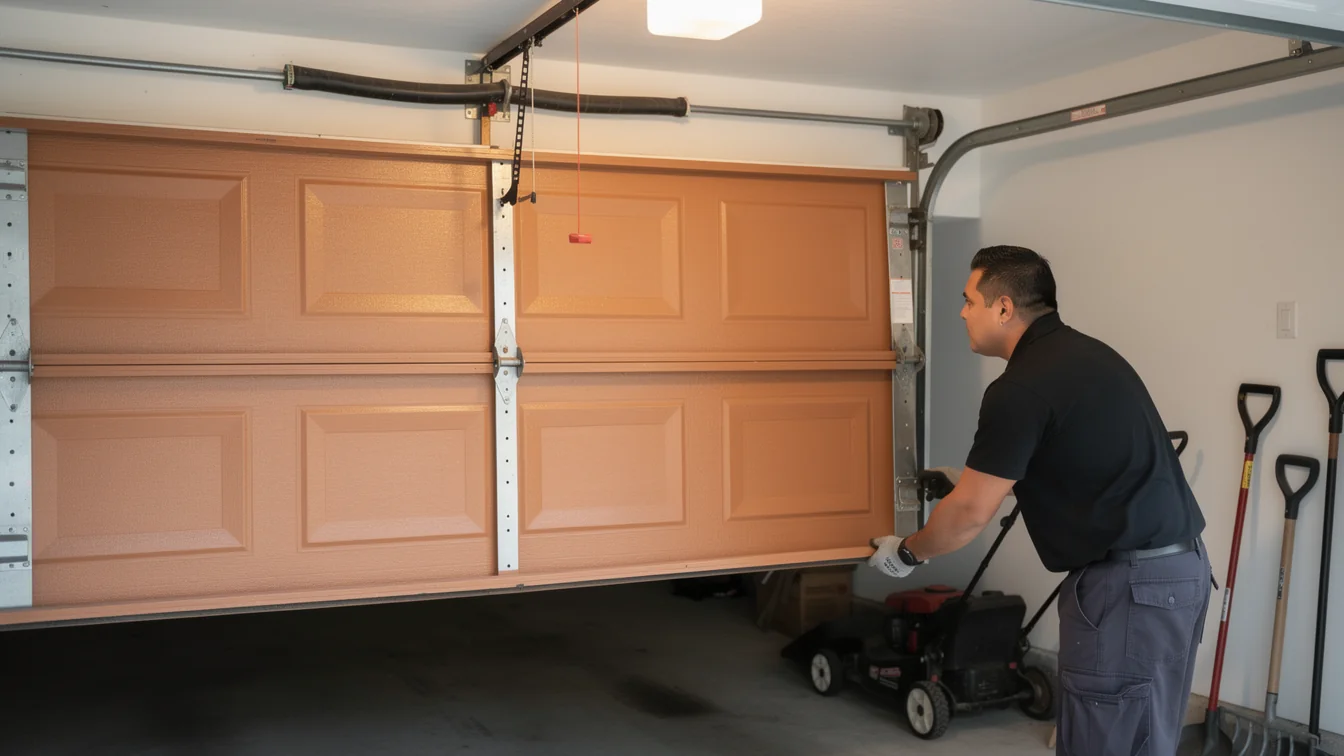
Alexandria's housing stock runs from 1940 to 2001, with most of it clustered in the 1960s and '70s - the median build year sits at 1977. That matters because a door installed when a house went up in Rose Hill or Belle Haven, both just three miles out, is carrying forty-plus-year-old hardware on a track system nobody designed for today's heavier insulated panels. Add in the cold-severe climate this region gets, and steel contracts hard enough in a January freeze to throw a torsion spring's coil tension off by a noticeable margin. A technician's first move here isn't to look at the opener - it's to check whether the spring and cable are original to a house built in that 1960s-70s wave, because that's the hardware most likely to be out of spec before anything electrical even enters the picture. Cold-weather contraction also tightens roller clearance in track built to older tolerances, which is why a door that rolled smooth in August can bind hard by December. None of that shows up on a visual opener check. It shows up when you put a hand on the spring and feel how much resistance has crept in since the last freeze.
How much does garage door repair cost in Alexandria?
We can't quote a number without seeing the door, and we're not going to pretend otherwise - there's no flat price that covers a 1977-built torsion system the same way it covers a 2001 one. What drives the cost up on the older end of Alexandria's housing stock, built as far back as 1940, is parts availability: original hardware on a house that age sometimes isn't stocked on the truck, and sourcing a matching drum or bearing plate adds a trip. What keeps cost down on the newer end of that 1940-2001 range is that more of the hardware matches current stock sizes. The other variable is how many of the 104,609 owner-occupied houses in this service area are sitting on original springs that were never replaced on a maintenance schedule - a spring run past its cycle count costs more to fix on an emergency call than it would on a scheduled swap. That's the honest driver of cost here: age of the hardware and whether the job is planned or urgent, not a flat per-door rate we can rattle off over the phone.
Signs you need garage door repair
The specific problem we see across this housing stock: torsion springs and worn rollers that were original to houses built in that 1960s-70s wave, now thirty to sixty years past installation, finally giving out in a cold-severe winter. Steel fatigues faster through repeated hard freezes than it does in a milder climate, and a spring that's been losing tension slowly for a decade can snap outright on the first deep cold snap of the season. We see this pattern across the named areas close to the city core - Taylor Run, North Ridge, Seminary Hill, Old Town - where homes built early in that 1940-2001 window are now old enough that original hardware has simply run out of life. The door doesn't fail because of bad luck. It fails because forty to sixty years of seasonal cold-to-heat cycling is exactly what torsion steel is rated to survive only so many times, and nobody replaced it on schedule.
The Common Mistake
The mistake we see most in this service area: spraying the track with household oil instead of checking the spring tension on a house old enough to have original 1960s-70s hardware. Lubricant on the track makes a noisy door quiet for a week, but it doesn't touch the real issue in a cold-severe climate - a spring losing tension through repeated winter contraction. We'd rather tell a homeowner that a temporary fix is just that than let them think a spray can solved it. The other common mistake is waiting for a full snap before calling, when a spring on a house built that long ago is often already visibly stretched or gapped at the coil - a five-minute check most people skip because the door still opens. It still opens right up until the morning it doesn't, usually on the coldest day of the year, which is exactly when a torsion spring under maximum cold-contraction stress is most likely to go.
Frequently asked questions
How old are most garage doors in Alexandria likely to be?
Most houses in this service area went up between 1940 and 2001, with the median build year at 1977, so a lot of torsion springs and rollers in neighborhoods like Lincolnia and Lake Barcroft are original hardware from that era - well past the point where cold-weather cycling has worn them down.
Why does cold weather cause more spring failures here?
This region sits in a cold-severe climate band, and steel contracts noticeably through repeated winter freezes. A torsion spring that's already lost tension over decades of seasonal cycling often fails outright on the first hard cold snap rather than gradually.
Can you give a flat price over the phone?
No - we won't quote a number before seeing the door. Cost depends heavily on whether the hardware is original to a house built decades ago, since older parts sometimes need a special order instead of a stock part on the truck.
Related garage door services in Alexandria
More garage door guides
Book garage door service in Alexandria
Call now or request a quote - tell us what the door is doing and where you are.